
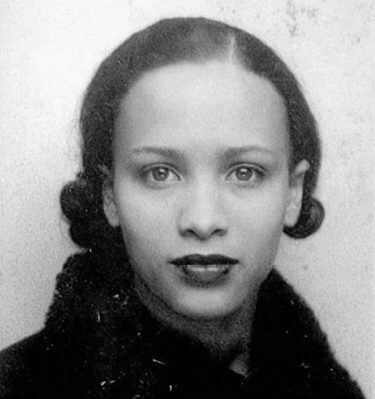
“When you read Suzanne, you take your Koutla.” Those are the words Valérie Adam said to me in Le Bureau d’Aimé Césaire during my last visit to my home country, Martinique. It is also this phrase that reignited the fire of my writing about Suzanne, to whom we are indebted for her liberating thinking. It is true that when you read Suzanne, a burning desire erupts, a desire to take sharp action to dismantle the plantation system, and cut the heads of the shadows.
Martinique is a land profoundly shaped by repetitive violent episodes of domination, colonialism and cultural erasure. In 1941, Martinique experienced another tentacular colonial period characterized by repression and censorship. Political parties and unions were outlawed, mayors dismissed, and municipal councils dissolved. Admiral Robert appointed new officials and positioned himself on the side of the conservative, racist béké bourgeoisie, who were staunchly loyal to domination and repression. It was during this period of intellectual oppression under the Vichy regime that Suzanne Roussi Césaire, alongside Aristide Maugée, René Ménil, and Aimé Césaire, co-founded Tropiques. This publication became a vital space for cultural resistance, fiercely opposing colonial ideologies. Through their writing, the “bamboo poets” of Tropiques boldly confronted the colonial imagination and the Pétainist regime with probity, wisdom, and assertive thinking.
Jeanne Anna Marie Suzanne Roussi Césaire was a thinker, a bamboo poet, and a Martinican activist born on August 11, 1915 in the Poterie neighbourhood in Les Trois-Îlets, located in the south of Martinique. Her father, Benoît Roussi, worked at a pottery, and her mother, Flore William, was a school teacher. Like many other young Martinicans, Suzanne left the island to pursue her studies in France in literature—first in Toulouse and then, supposedly, in Paris at the École Normale Supérieure of Sèvres; in fact, in Suzanne Césaire: Archéologie littéraire et artistique d’une mémoire empêchée, Anny-Dominique Curtius highlights that despite the shared memories of those who knew Suzanne Césaire, the specifics of her scholarly path remain elusive and fragmented.
Suzanne Roussi and Aimé Césaire married on July 10, 1937 in Paris; at the time, Suzanne was already a great avant-garde figure—she dressed in red for her wedding. They returned to Martinique and they both became teachers at the Schoelcher High School.
When the shadows of oppression lengthen, how do poets weave to ignite the flames of resistance?
*
I must emphasize that when I began to immerse myself in Suzanne’s writings, I chose not to speculate about her personal life or on her relationship with Aimé Césaire. Instead, I approached her as who she is: a person who has contributed abundantly to the Black Caribbean and post-Négritude philosophy. Through her work, she continues to offer us a profound and tangible legacy of reflection; Suzanne’s writings are a powerful reminder of what it means to be intentional—how literary practices operate as forms of resistance and cultural affirmation. Beyond that, she embodies what it means to be Martinican: to reject the politics of doudouism, and to assertively question the complex, ongoing relationship with the colonizer that still persists today in Martinique. This wound extends and prolongs itself into the present social and economic order, where the “midnight blue skin” continues to endure through classism, discrimination, and rejection. Over time, the plantation system has mutated, like a metastasis, corrupting a land that never was theirs. Martinique has witnessed and lived through myriad forms of colonialism, always asserting itself with condescension, but never shame.
My thoughts align with those of Martinican professor, Anny-Dominique Curtius, who asserts that Suzanne Roussi Césaire was no one’s shadow; the speculation suggesting that Suzanne wanted to remain in the background, or even be forgotten, is nothing more than an unnecessary conjecture and defilement of her memory. In an interview given in March 2021 for the Paris-Caraïbes blog, Anny-Dominique Curtius states: “I believe that if Aimé Césaire had spoken about her work, French and Caribbean intellectuals and writers would not have articulated what I call a rhetoric of reserve and avoidance, which I conceptualize in order to analyze the dynamics of silence that surround Suzanne.”
At no point during the short life of Tropiques did Suzanne show any form of self-erasure. The concept of camouflage and the cannibalistic tactics present in her thinking and texts were deliberate, assertive strategies that, on the contrary, demonstrate her presence, her convictions, and her positioning as a Martinican activist. Suzanne was not in anyone’s shadow, neither was she seeking to be. Suzanne co-wrote the letter of response to the censorship of Tropiques on May 12, 1943, addressed to Lieutenant Commander Bayle, also referred to as the “head of censorship”.
In this letter, Suzanne Césaire expresses herself clearly, firmly, and in direct opposition to the regime and its methods, when she states:
Sir,
We have received your indictment against Tropiques.
“Racist, sectarian, revolutionary, ungrateful and traitors to the homeland, soul-poisoners”—none of these epithets essentially repulses us.
“Soul-poisoners”—like Racine, according to the gentlemen of Port-Royal.
“Ungrateful and traitors to our good homeland”—like Zola, according to the reactionary press.
“Revolutionaries”—like Hugo of Les Châtiments.
“Sectarians”—passionately so, like Rimbaud and Lautréamont.
“Racists”? Yes, of the racism of Toussaint Louverture, Claude McKay, and Langston Hughes—against that of Drumont and Hitler.
As for the rest, do not expect from us any excuses or even any discussion.
We do not speak the same language as you.
[Sgd.] Aimé Césaire, Suzanne Césaire, Georges Gratiant, Aristide Maugée, René Ménil, Lucie Thésée
When Suzanne writes in Tropiques, she is neither in a position of inferiority nor competition with Aimé Césaire. On the contrary, Suzanne nurtured ideas and created many notions and methodologies, which ubiquitously influenced Aimé Césaire’s thinking—as Anny-Dominique Curtius points out when she explains how Suzanne gave him the keys to the “cannibalistic tactic”, which he later adapted in A Tempest, a Black adaptation of Shakespeare’s The Tempest, published in 1969. On a similar note, in relation to Tropiques, it was Suzanne who submitted the articles to Admiral Robert’s information services for content control and requested the paper needed for printing.
In what semantic framework does the phrase “Under the foliage” resonate?
*
The Great Camouflage: Writings of Dissent (1941-1945), a collection of Suzanne Roussi Césaire’s writings, published in 2012, is where we uncover a powerful voice and an assertive bamboo poet. Being an antagonist of the doudou poet, the bamboo poet rejects any form of doudouist dynamic and, in contrast, welcomes an eco-critical thinking. From Suzanne’s writing emerge the genuine concepts of linguistic cannibalism and eco-critical methodologies, in a space where the exoticized Caribbean environment becomes not only a tool, but also a shelter for thought and a release for the suffering of Martinican people. It is this assertion of a Caribbean-centred reality and thought that outlines and gives shape to ideas that still resonate today in the French colony of Martinique.
Suzanne uses a tactic that goes beyond metaphor—a poetics in which the very act of vocalizing the land becomes an act of resistance and liberation. She refuses both the posture and the label of the “doudou” poet—a role that creates a sense of ease only suitable for those who see, imagine “or live the Antilles as a cheerful tropical paradise”. Suzanne instead denounces and questions the reality of being softened and misrepresented in collective narratives that do not reflect the Caribbean community and consciousness. The doudouist perception also applies to Suzanne’s friends. As Anny-Dominique posits, André Breton, whom one might have expected to demonstrate decolonial awareness, fell short. Despite himself—or perhaps knowingly—he once wrote about Suzanne in “A Great Black Poet”, saying: “Suzanne Césaire as beautiful as the flame on a bowl of punch.” This becomes entangled in the uncomfortable, misplaced game of exoticizing a Black Caribbean woman. His gaze upon “tropical femininity” is deeply flawed, caught in a white and colonial mindset that projects fantasy and illusion onto her. It becomes clear that he is rooted in the doudouist literature clichés—unable, at a deeper level, to recognize Suzanne as the wise thinker that she truly was. Instead, she appears to him as an exotic creature; a backdrop, rather than an intellectual with a magmatic power of thinking.
In “Poetic Destitution”, Suzanne directly critiques this doudou poetry and the kind of thinking that comes with it:
But the ‘wonder’ of the Morne? Its aura? Its harsh promise? The dynamite of the hill? Instead, we get fainting fits, nuance, style, words, soul, blue, gold, pink. It’s cute, it’s polished. Hammock literature. Sugar and vanilla literature. Literature of tourism. Blue Guide and CGT. Poetry? Absolutely not.
Rather than emphasizing and manifesting this extremely superficial aesthetic, Suzanne asserts a literary gesture and a thought that borders on eco-criticism—one in which the Caribbean environment is no longer a backdrop, but becomes a method and, most importantly, a vessel for decolonial thinking. It is here that the tactic or what Anny-Dominique Curtius calls “liana dialectics”, takes centre stage: “I call it Suzanne Césaire’s liana dialectic—that is, her vision of a decolonization of nature and her conception of an identity and aesthetic affirmation intended to exorcise a painful history whose traces are borne by the body”. Suzanne, then, proposes what Anny-Dominique refers to as a philosophical ambivalence.
Writing about Suzanne’s works comes with an acceptance of composing with fragments and non-perceptible answers to counter the crisis of representation she suffers. In her writings, Suzanne Roussi Césaire advocates a language that is intrinsically our own, a language understood by us to lift the veil violently placed on our eyes. Her words: “Martinican poetry will be cannibalistic or will not be”, foreground a counter-dynamic, where her tactic of linguistic cannibalism aims to liberate tension, making space for the wounds to be worded, sharpness to be addressed and for a Martinican liberation to erupt.
How can Caribbean geology act as a tactic?