
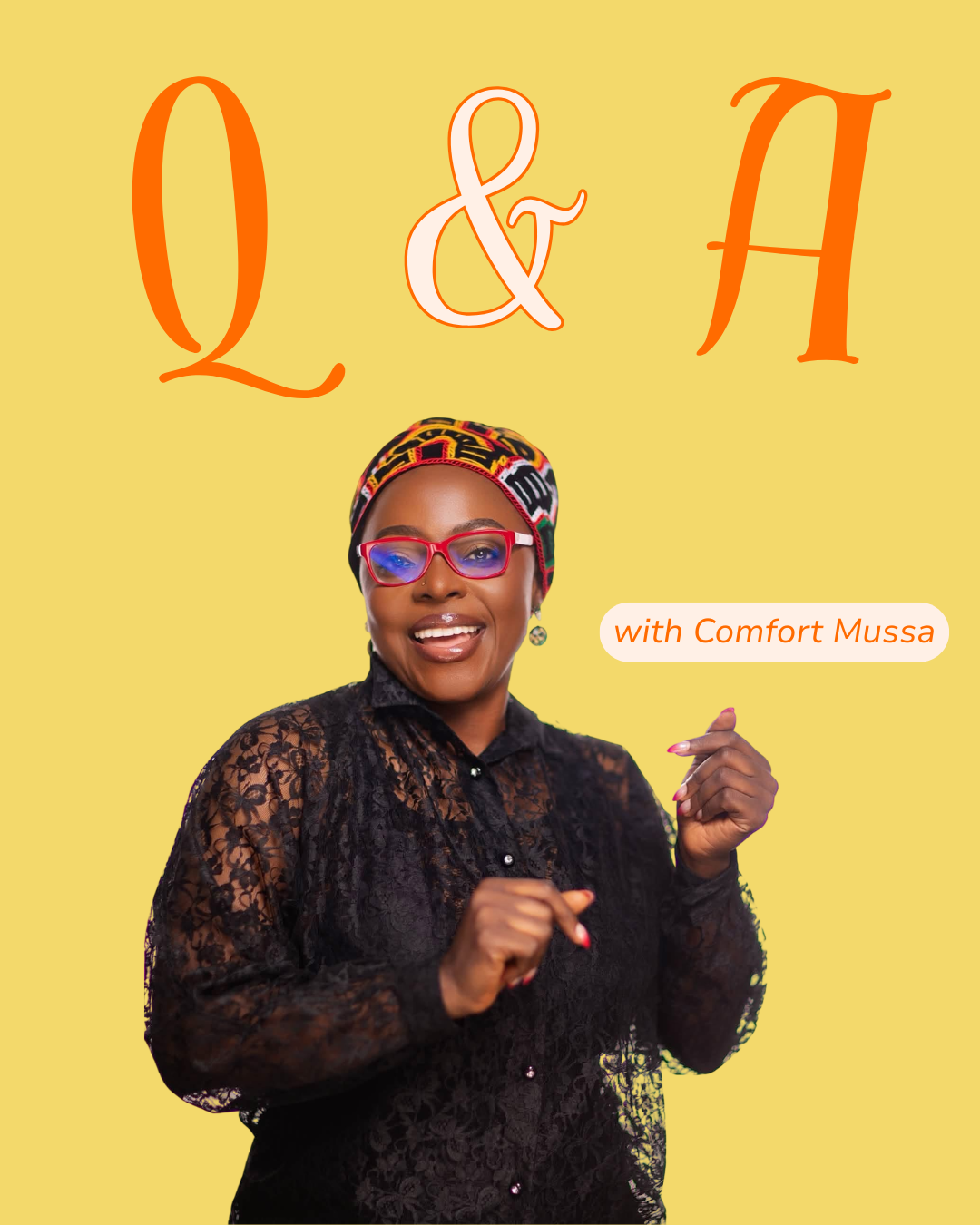
Iya and Mambo meet each other at a moment when both are carrying something heavy. Who came to you first, and what did you want their friendship to say that neither girl could say alone?
Mambo came first. She arrived with a kind of silence that stayed with me. She had learned to live with experiences she hardly had the words to name, and that silence felt worth interrogating and worth understanding. I wanted to explore what happens when a young person carries so much that speaking about it feels impossible.
Then came Iya. Through her, I began to see how friendship can create space for truths that are difficult to face alone. One of the things I love most about friendship is its ability to draw out parts of ourselves we may not even know are there. Together, Mambo and Iya become braver, more honest, and more hopeful than they might have been on their own.
Their friendship expresses something neither girl could fully express alone: that healing is often relational. Sometimes it takes another person listening to us and standing beside us before we can begin to find our voice. That’s the gift of friendship, and it’s at the heart of their story.
You have spent years as a journalist and advocate telling other people’s stories. What made this one need to be fiction, and why a novella for young adults rather than another form?
For a greater part of my career, I have worked with young people, particularly around sexual and reproductive health and rights. Over the years, I have listened to their questions, their fears, their dreams, and the things they often struggle to say out loud. Those conversations have stayed with me.
While journalism and advocacy have allowed me to tell important stories, fiction gives me the freedom to explore the emotional landscapes behind those experiences. It allowed me to ask, “what if?” and to sit with questions that do not always have straightforward answers.
I chose a young adult novella because I believe there is still a significant gap in the stories available to young readers, especially on our continent. There are too few books written intentionally with young people in mind, and even fewer that fully center persons with disabilities as whole, complex, and nuanced characters who are not side notes in someone else’s story.
The Shape of Unbroken Things was my attempt to help bridge that gap. I wanted to create a story where young people could see themselves, their struggles, their friendships, and their possibilities reflected back at them. I also wanted to contribute to a future where accessibility is not treated as an afterthought, but as a natural part of how we create and share stories.
What was your day-to-day writing process like, and was there a scene that refused to come right until something in your perception changed?My writing process was rarely neat. A lot of the story was born while I was traveling. I always carried a pen and notebook with me, and I would jot down snippets of dialogue, character thoughts, scenes, or ideas as they came. Later, usually when I had more time and quiet, I would transfer those notes onto my laptop and begin shaping them into the story.
In some ways, the notebook became a companion to the novella. It allowed me to capture moments before I forgot them.
There was also a scene that resisted me for quite some time because I was trying too hard to explain what the characters were feeling. Eventually, I realized not everything needed to be stated outright. Young people often communicate through silences and things left unsaid. Once I trusted those quiet moments and allowed the characters space to breathe, the scene finally came together in a way that felt honest. That experience taught me something about fiction itself: sometimes the most important truths are not spoken. They are felt.
This is the first book of its kind to be born in print, braille, digital and forthcoming audio. Who is the one reader you most hope picks it up, and what do you want them to feel when they finish?
I hope it reaches the young person who has ever felt invisible, unheard, or excluded from stories. Perhaps it is a reader living with a disability, a reader navigating grief, or simply someone trying to find their place in the world.
When they finish, I want them to feel seen. More than that, I want them to understand that being wounded is not the opposite of being whole. The title itself speaks to that belief. We are shaped by what we endure, but we are not defined by our brokenness. I hope readers close the book with a renewed sense of dignity and belonging.
What surprised you most about becoming a novelist, and what was the hardest moment between the first draft and looking at the finished work?
What surprised me most was how much patience fiction demands. In journalism, deadlines often require quick decisions. Fiction asks you to stay with uncertainty much longer. You have to trust the story before you fully understand it yourself.
The hardest part was learning to let go. Every draft felt like a conversation with the story, and every revision required me to surrender something I thought was essential. Yet seeing the finished book, especially knowing it would be available in multiple accessible formats, made those difficult decisions worthwhile. Holding the final work reminded me that stories are not meant to stay with their writers forever. They are meant to find their readers.
The Shape of Unbroken Things/Ce qu’ on ne brise pas is available worldwide, and in Cameroon via Bakwa Books.